Proven from Sydney Hobart to Tahiti Named Dimension-Polyant cloth Designed in Geelong, shipped worldwide Talk to a sailmaker
Go
Browse all 1,200+ boats →
About Kraken Sails

Performance,
Made Accessible.

Kraken Sails is a Geelong loft run by two people who race offshore. We design every sail to perform, whether that means winning a race or carrying you around the world, and we price it so more sailors can have one.

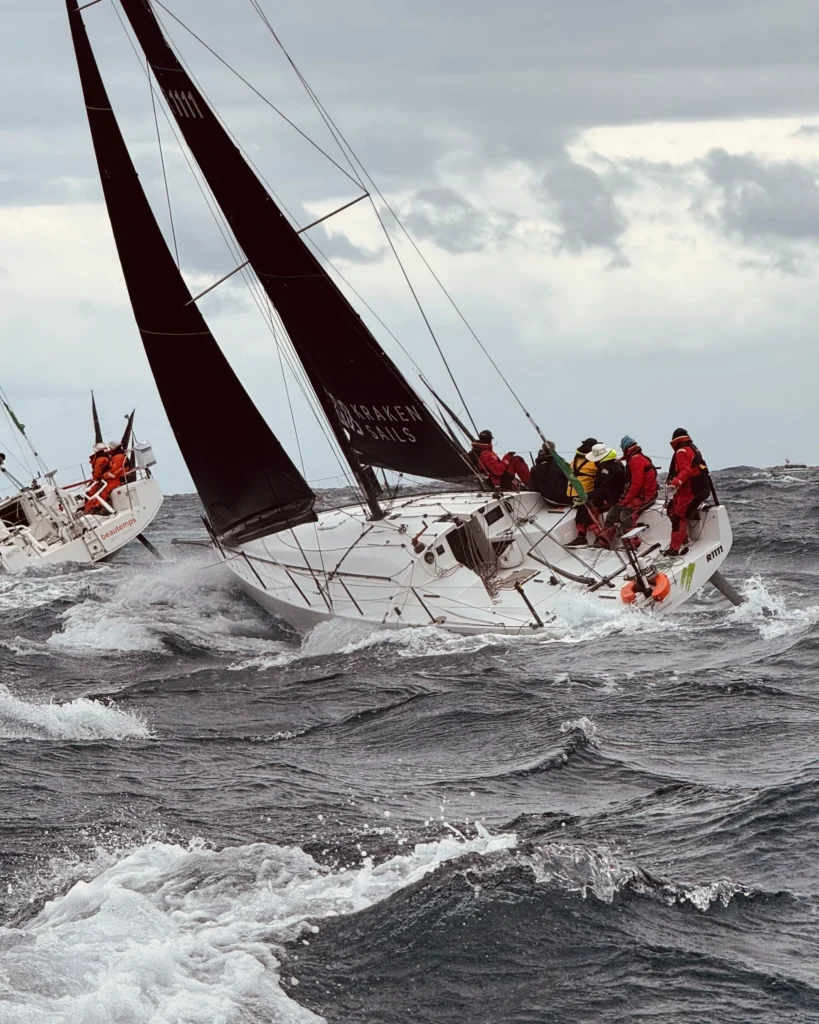
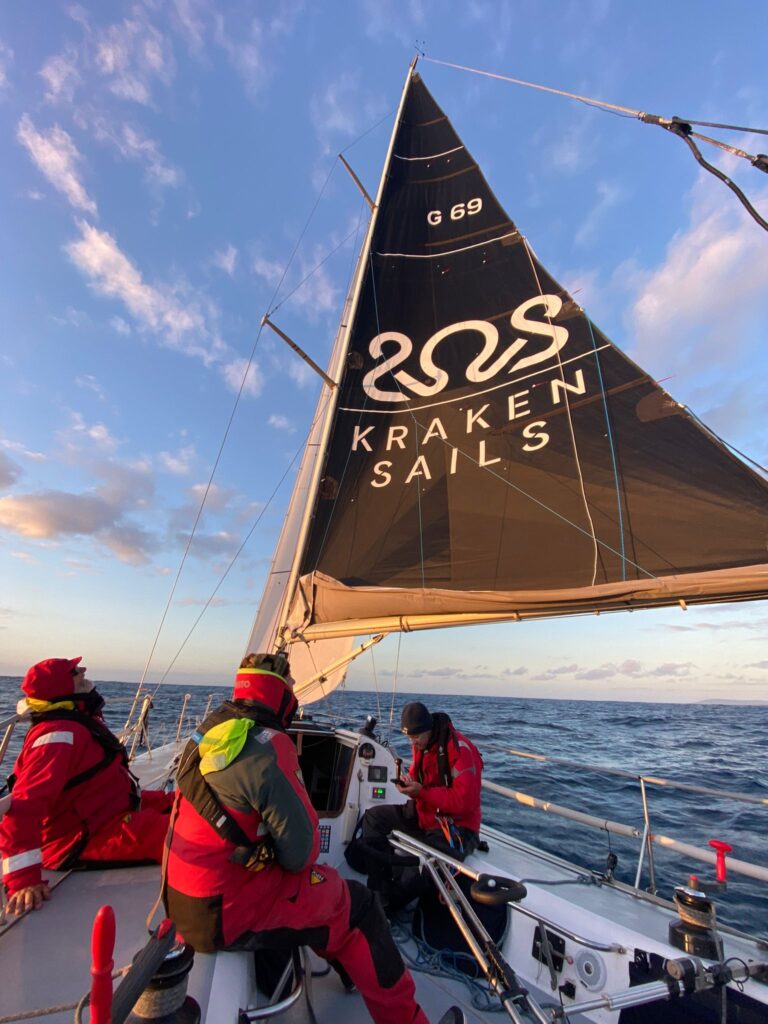
Racing yacht with black Kraken sails and crew on the rail in a big sea

Rudder Cup 2026

Toecutter, on Kraken sails, wins AMS and PHS in the Melbourne to Devonport, Australia’s oldest ocean race (first sailed 1907).

Apollo Bay 2026

The Kraken wins the Melbourne to Apollo Bay overall on AMS, plus ORC Division 2.

King Island 2025

Toecutter tops ORC in the Melbourne to King Island.

5,500 nm to Osaka

White Spirit races double-handed from Melbourne to Japan on a Kraken mainsail and A2.

How it started

A Stranger
on the Dock.

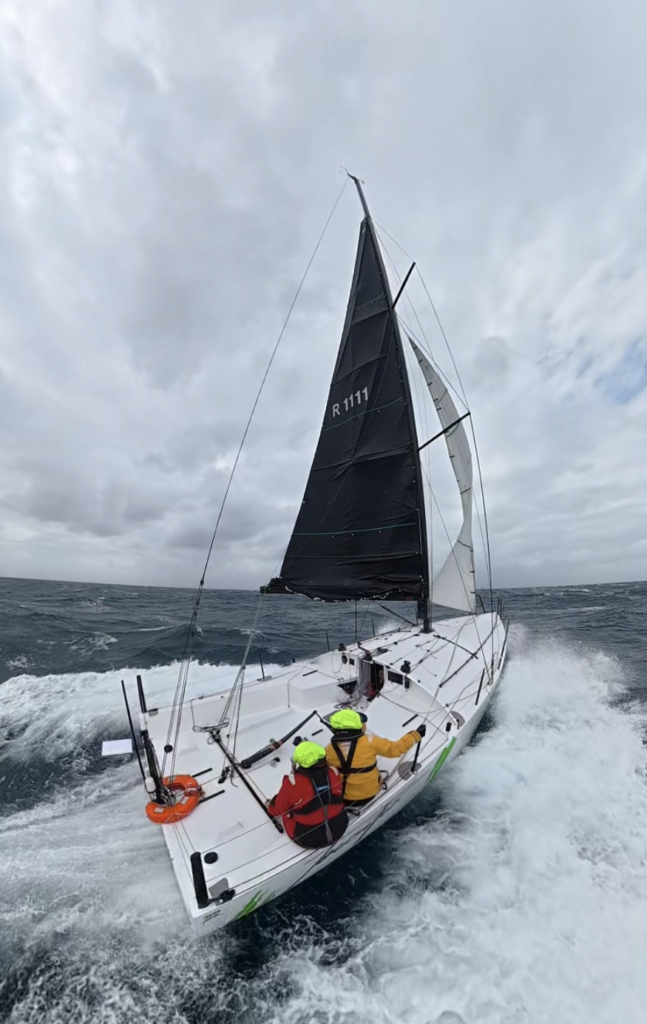
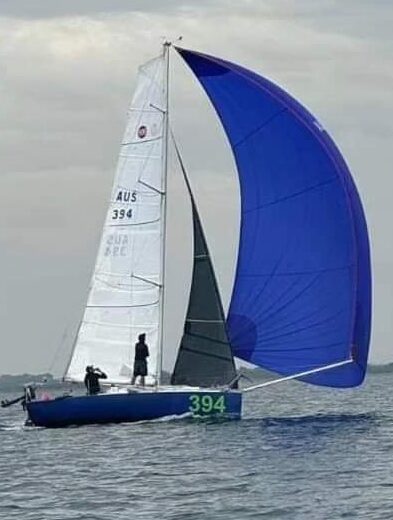
I was walking down the dock when I saw Ryan’s Mini. I didn’t know there were any in Australia, but they seemed like my dream boat, a keel boat I could race offshore and not depend on anyone.  I was bold enough to introduce myself to Ryan and his wife Charlotte and leave my number in case they changed their mind.  Instead, 2 days later,  Ryan had found me one in New Zealand instead, and helped me rebuild her after she was shipped to Melbourne.

Kraken wasn’t my first plan. I’d been working on bringing a New Zealand sailmaker’s brand to Australia, and looking hard at how his loft worked. When that fell through, I had a rebuilt Mini, a head full of ideas about what was wrong with the out of date industry, how sails should be made, and a four hour delivery to Blairgowrie with Ryan, a couple of mates and a bottle of rum.

Somewhere on that delivery I said that while the NZ sailmaker had fallen through, the good news was that from all my research, now at least we could get decent sails for our own boats. Ryan said I should back myself and start the loft anyway. Then he chased me about it for two weeks. 

We registered Kraken Sails in August 2024. Three days later, three of the world’s biggest sail brands announced they were merging under one owner. If we’d needed a sign that the industry needed a new player, that was it.

Canapé
Why we bother

Two Frustrations.
One Loft.

Ryan had dropped an old sail at a big-name loft in Melbourne to be measured for a new one. Days later he picked it up, still unmeasured. Unless you had a glamour boat, it felt like nobody wanted to know you.

I’d just imported a boat and couldn’t afford brand-name racing sails. I also knew that cheap online sails wouldn’t work as racing sails, so I might as well not buy them at all. I had a new boat and no way to compete with it.

Nobody in the sail industry is malicious. It’s decades of bloat: layers of cost on top of what should be simple.  Some lofts grew into big brands, and the costs grew with them.

But sail making doesn’t need to be like that.  Strip out the franchise and distribution layers and a sail doesn’t need to cost that much to be well considered and well made.

We built Kraken for the sailors who got priced out. Maybe you’re not yet 50, you’ve got a young family and a mortgage, and you can’t race the way your parents did, or take the kids sailing for a year before high school, because sails cost too much. Maybe you can afford sails from the big lofts but you’d prefer to spend your money on regatta entries, charters in the med or rum.

We believe that with a new business model (that’s proven in other industries), we can increase the customer service, increase the quality of the sails, and decrease the financial cost of entry to sailing. 

We came to sailmaking from outside it. Neither of us grew up in a family loft, and that turned out to be an advantage. The most interesting ideas happen at the crossovers between industries, and sailmaking had stopped looking over the fence.

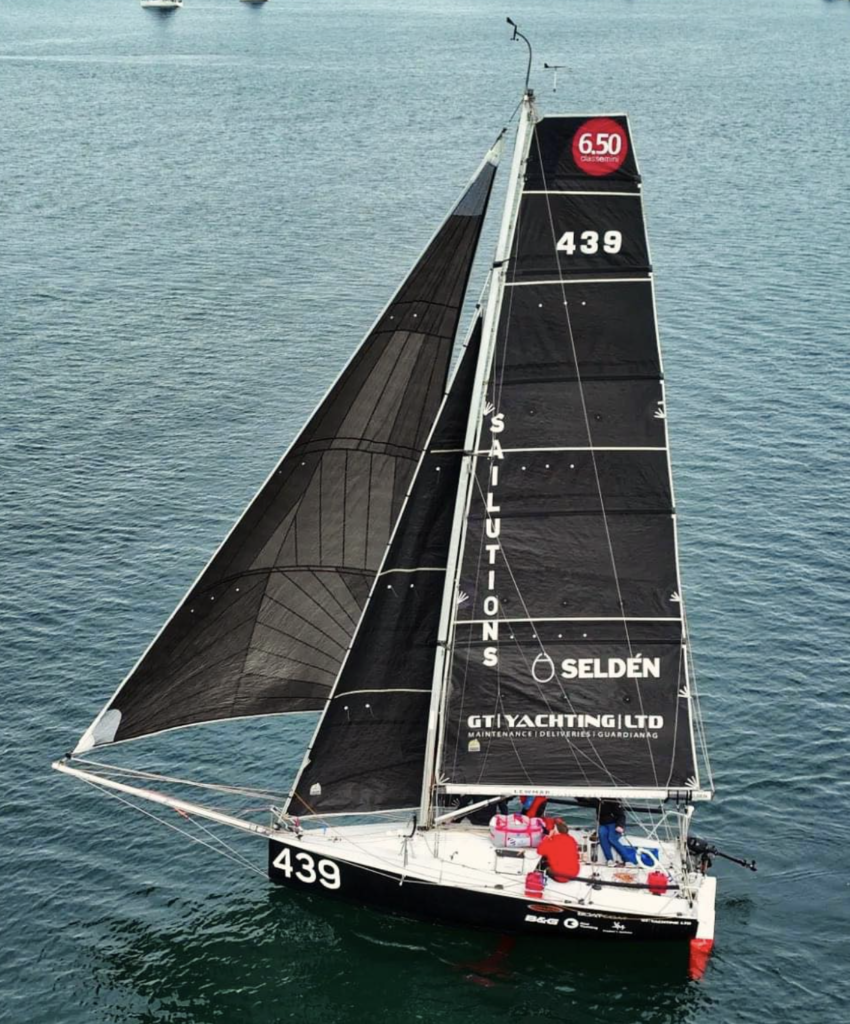
toecutter shorthanded
Christie Manly Juniors
The people

Christie Hamilton.

I’ve never really fitted the mould. I raced my first nationals at seven in Manly Juniors, sailed Lasers, 16 foot skiffs, Ynglings and J24s, spent ten years in the Victorian Alps chasing hard things, and came back to the water because the smell of it still feels like home.  While my friends were working career jobs and starting families, I was competing in cross country Paragliding and running expeditions to the Himalayas.  

Until my late thirties I had a nine millimetre hole in my heart that nobody had found. It made everything harder than it needed to be, and I didn’t know why. It had me left out of teams and left off of lists not really understanding why I could work very very hard and not make the cut. But the upside of that was that I forged my own path and created my own adventures, if I couldn’t make national selections because I couldn’t pass the beep test, then I’d climb mountains on my own instead. It taught me that sailing isn’t only for the fittest or the most experienced. There’s a way in for everyone and you have an infinite way to craft your own adventures. 

I grew up with a lot of privilege, and I won’t pretend otherwise. I also grew up at the tail end of “girls don’t sail”.

I’d been racing since I was seven when my parents tried to get me into a big club’s youth program. A boy my age had been let in at ten; the girls needed to wait until eleven. Luckily my mother was a woman who broke ground in her own way, and was happy to march down to the club and argue that if a boy could start at ten, so could I. I got in. The women a generation ahead of me had it far harder, but I know a little of what it’s like to have to prove you belong. It’s why Kraken doesn’t gatekeep.

I race crewed, and what I love most is that a boat doesn’t reward one brilliant person. It rewards a team, from all walks of life, each bringing something.   You can’t win a race with one hotshot on the bow, or an excellent driver.  Someone needs to feed the crew, someone else needs to know where we’re going. That’s how I want Kraken to feel too: no ego, just a conversation where we both might learn something.

Sailmaking is high consequence. Get a sail wrong and it might end someone’s trip of a lifetime, or their life. With a lifetime of extreme sports, whether it’s cycling across continents solo and unsupported, or the high-stakes game of cross country paragliding, I know what it’s like to rely completely on the gear you chose, so I take that seriously.

When I was a teenager, my dream job was project manager at Everest Base Camp: organising everything so other people could chase their dreams. Now I have it, except instead of helping people climb mountains, I’m helping people cross oceans.

But I’m not really a racer at heart, right now that’s the format that suits where I live while the girls are still at school and we’re tied to Melbourne.  For now, ocean racing meets a need that in time will turn back to adventures to far flung locations with friends.  If you can race in the southern ocean, then you can develop the skills to cruise to Antarctica when the girls are older. 

Every sail we make is part of someone’s bigger dream: a race of a lifetime, the crossing they’ve thought about since they were a kid, taking the family somewhere extraordinary, or getting out on the local dam with the kids or friends and passing their love of the sport on to the next generation. To be a part of that, is perhaps the dream job.

Christie races Kraken Sails Toecutter offshore and she reads every quote request that comes in.

The people

Ryan Walker.

Ryan’s dad won a Thunderbird world championship, so sailing was never optional. His first memory is the Hastings race on a Southern Ocean 32 at about ten. He started racing Cadets in Geelong and soon found himself chaperoned in Poland, representing Australia at the International Cadet world championships at 16. From Cadets he moved into 49ers, and kept racing through uni.

Offshore came calling, and Ryan completed his first Melbourne to Hobart Westcoasters and Sydney to Hobarts in his 20s. From there it was Cowes (Wight, not Philip), racing Farr 40s and SB3s, plus deliveries on Swans and superyachts.

He’s done one of the best Hobarts and one of the worst. On Shogun, the kite went up coming out of Sydney Heads and didn’t come down until the bottom of Tasmania, at 20 knots and more for days. In 2004 it was 50 knots on the nose, with about four crew still able to work. “It taught me more about people than gear. The right boat, the right crew, well prepared. The crew tend to fall apart before the gear does.”

Back on the Bellarine Peninsula, he has raced Lasers (2nd in the State Titles), assorted dinghies and Marley Points, and jumped on a Cookson 50 for more Hobarts. He came to Kraken from Walkers Tiles, his family’s business since 1906. Kraken was the chance to build something from scratch, in the sport he loves, and to see sailmaking from the customer’s side of the counter first.

His beef with the industry is service. When an old sail came back from a big-name loft still unmeasured, he figured that’s exactly what turns people off the sport. “We want to be easy to deal with, modern, and deliver what we say we’ll do.” And the one thing he wishes every owner knew: “You don’t need to pay Mercedes-Benz prices to get a really great car.”

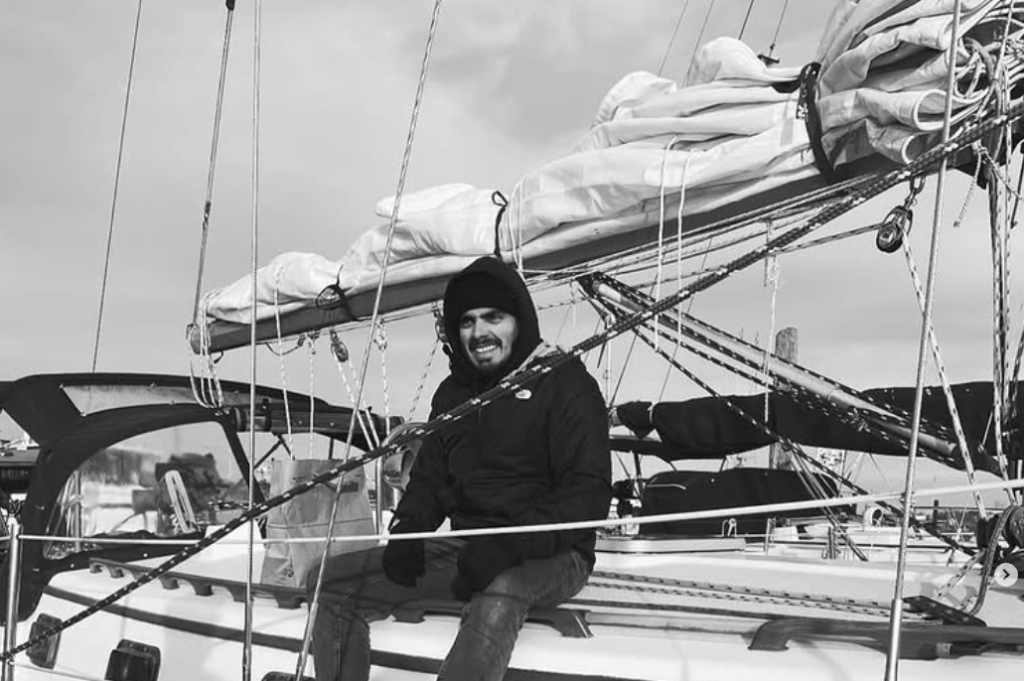
He races his Sydney 32, The Kraken, sits on the Board of the Royal Geelong Yacht Club, and still holds the partnership’s top speed record: 39 knots on a windsurfer. Why call the boat The Kraken? “We’ve got nothing to hide.”

He’s also the reason this loft exists: he’s the one who told me to back myself, then wouldn’t let it go for two weeks.

Ryan Offshore | Kraken Sails
The difference

A Sail That Looks Like a Sail
Isn't Enough.

It’s easy to think a cheaper sail just makes you a bit slower. That’s not really how sails work. A sail drives your boat by the force its shape creates. Put the draft in the wrong place and that force moves from over the bow to over the beam. The sail pulls the boat sideways and levers it over. You heel, you wallow, you fight the helm, and you don’t go where you want to go.

Who designs it.

Every Kraken sail is designed by an Australian or American designer with more than ten years of design experience who still races at international level. Someone who has felt how cloth loads up and where that load puts the draft.

A designer who has never sailed can’t know the difference between slogging through chop, flat water and an ocean swell, even for two boats with the same rig.

What it's built to.

We build from your boat, not a brochure and not your old sail. Making a sail from published rig numbers is like making a new suit from an old suit instead of measuring the person. On a 20 year old boat the track, furler and jib cars have often moved. We help you measure remotely and cross-check every number so nothing is missing.

The details nobody prices.

Setback at the tack and the boom so the sail sits right. Mast bend mapped properly, so the sail sets and the slides don’t bind on the hoist. Batten ends that don’t chew through the sail. There are a hundred ways to build a cheaper sail, and most buyers would never know to ask.

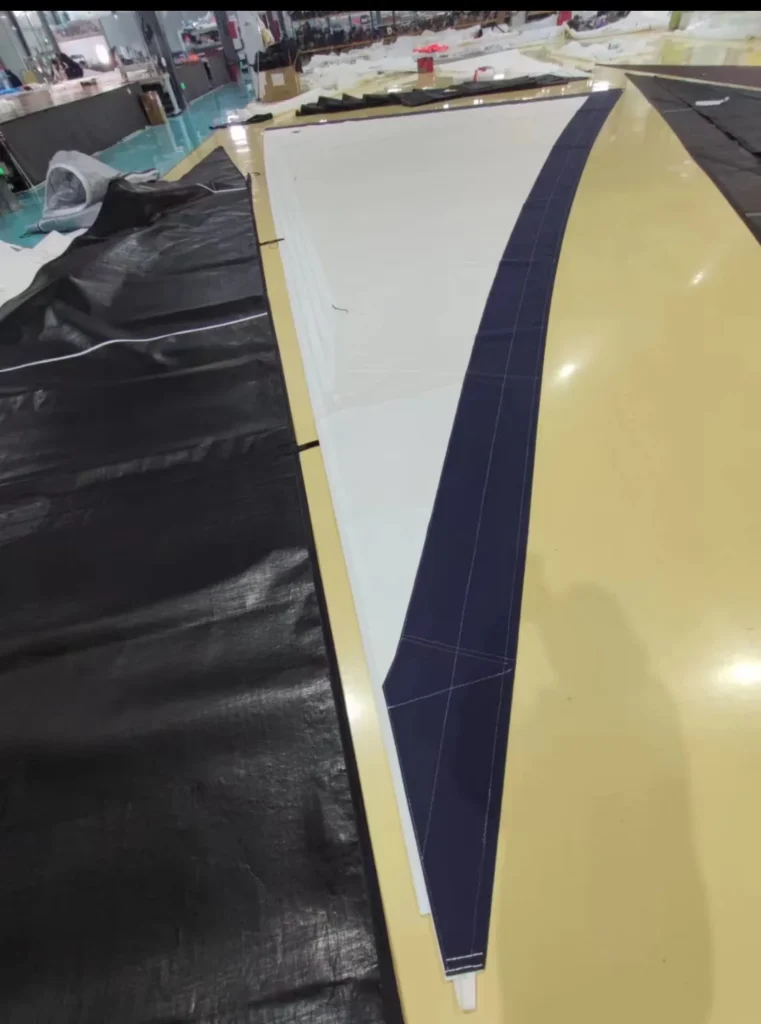
Furling genoa with navy UV cover laid out on the loft floor
The conversation

The Magic Is
the Conversation.

An online quote gets you in the ballpark. The sail gets good when we talk.

A bluewater family sailing the trades double-handed, with a new baby aboard, came to us for a 150% genoa. We built a 135% instead, lighter to tack shorthanded and safer on a deck where a toddler will soon be walking. We gave it a soft clew, so a flogging sail doesn’t swing a hard corner at the height of a small child’s head. It needs a little more care. The boat is a little safer.

An owner of a 50 foot Hanse races in light air and often sails shorthanded. He wanted every bit of mainsail roach, but kept snagging the leech on his lazy jacks. So we built a leech pocket that sits smooth, with no Velcro flap to catch.

The most expensive sail isn’t the best sail for your boat. A stiff carbon membrane won’t make a club racer faster, but it will make every hoist a chore. If you like track days, buy a track car; if you like four-wheel driving, get a Land Cruiser. If your mast doesn’t bend, you don’t need a bendy sail. And for almost every cruiser, full battens are worth it: a little heavier, and they last much longer.

A crew that has sailed together for ten years doesn’t need the same sail as a crew in its first season. Sometimes the right answer is lighter. Sometimes it’s tougher. We only know by asking.

But before we build any sail, whether the boat is 14 feet or 40, we ask the questions. 

The cloth

A White Sail
Is Not a White Sail.

You can’t see what makes Dacron work. Good yarn, woven tight. Resin that locks it so it can’t stretch. Coatings that protect it from UV and mildew. Each step costs time and money, and they’re exactly the steps a cheap mill leaves out. That’s where the old baggy sails come from, the ones with heavy weather helm that wallow and won’t point.

When we started, we took our designers’ word on cloth. The more we learned, the more we backed Dimension-Polyant, and now every cloth we use is made in Europe or America. The price difference is small. Build a well-designed sail from cloth that’s ten percent cheaper and you end up with a sail that’s a dog.

We think of it as a duty of care. Most sailors don’t know to ask about resins and coatings, so we make a point of thinking of the things they don’t.

Where our sails have been

Invoice Number One.

Our first sail went to our mate Toby on Dark and Stormy, a mainsail for his first Sydney to Hobart. When we sent invoice number one, I nearly changed the number so he wouldn’t know he was our first customer. Then I didn’t. Be honest about who you are: this is what we’re trying to do, we’ll make some mistakes and we’ll put them right, come along if you believe in it.

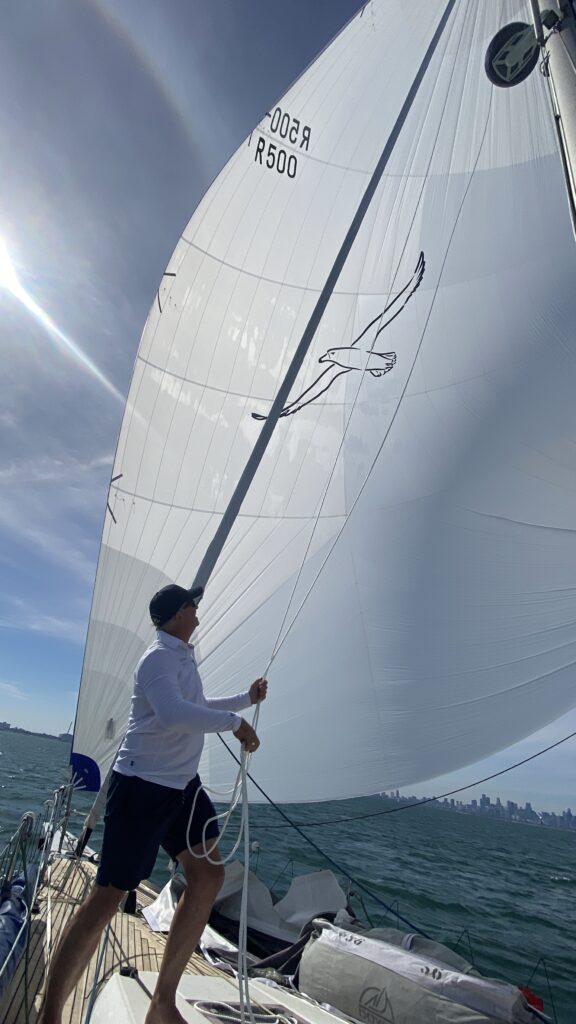
As Toby put it, you don’t spend tens of thousands of dollars getting to the start of the Hobart with the one sail that might blow up. You can change a headsail, but you’ve only got one mainsail. Less than six months after we registered the business, our logo, far too big, was on that start line. We’re not here to fuck spiders.

We hoped to sell six sails to our mates in the first year. We sold sails to 12 countries.


The timeline proves that we can build sails that race, and build sails that cross oceans. 

August 2024

Kraken Sails is born.

Registered in Geelong. Three days later, three of the biggest sail brands merge under one owner. If we didn’t already know what we were doing was important, we knew then. 

Wild Child Mini

Late 2024

Oregon to Hawaii, singlehanded.

Oliver Widger and his cat Phoenix sail a Compac 33 to Hawaii on a Kraken mainsail and storm jib. On day 11 he loses his rudder and the sails flog for four hours in 25 knots. “The sails held. Everything held.” Read Oliver’s story

Sailing with Phoenix Hero | Kraken Sails

December 2024

Our first Sydney to Hobart.

A new mainsail on Dark and Stormy, a Murray-Burns-Dovell 37, for Toby’s first Hobart. Invoice number one.

Ocean Racing Rudder Cup with Dark and Storm's tri radial main

March 2025

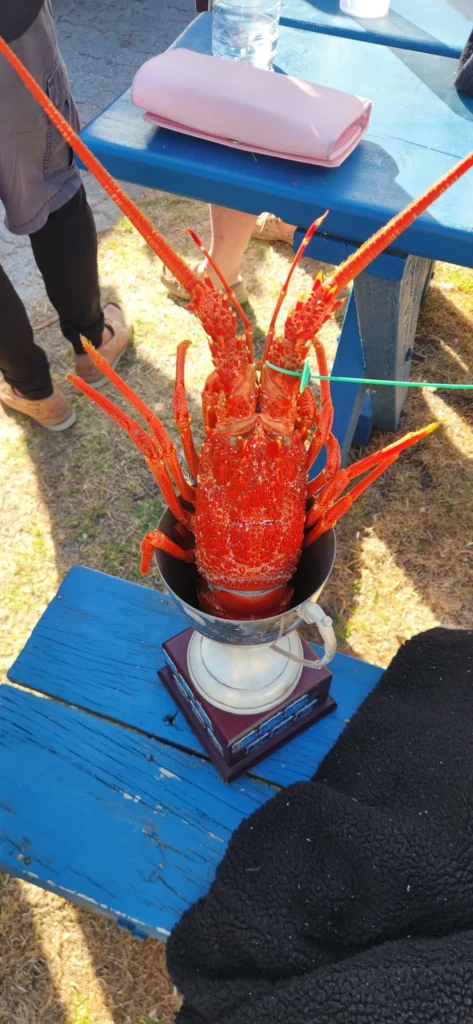
King Island.

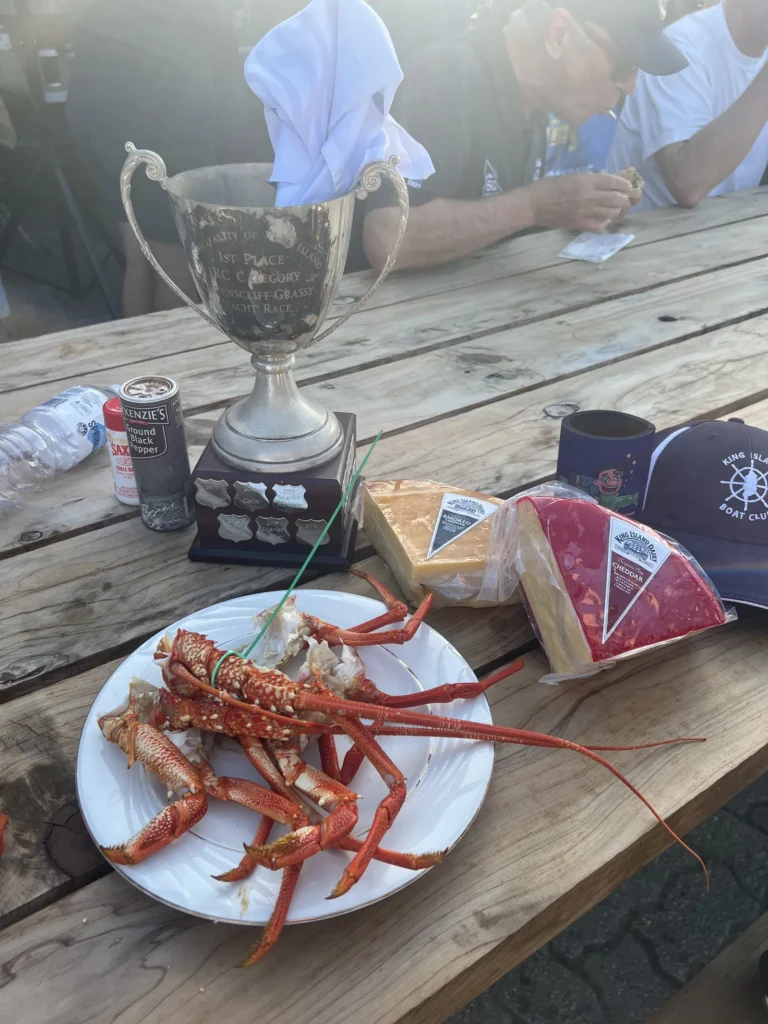
Toecutter tops ORC in the ORCV Melbourne to King Island race.

King Island race trophy filled with a crayfish

March 2025

5,500 miles to Osaka.

A triradial mainsail and a doldrums A2 on White Spirit, a Beneteau First 50, racing double-handed from Melbourne to Japan, then the Hobart: about 12,000 miles on the sails. Read the story

White Spirit A2 First Hoist

May 2026

Apollo Bay.

Ryan’s Sydney 32, The Kraken, wins the Melbourne to Apollo Bay overall on AMS and takes ORC Division 2.

October 2026

The Rudder Cup.

Toecutter wins AMS and PHS in the Melbourne to Devonport. First sailed in 1907, it’s Australia’s oldest ocean race, nearly 20 years older than the Fastnet.

Toecutter Bass Strait Dawn

Every year since

Across the Pacific, and beyond.

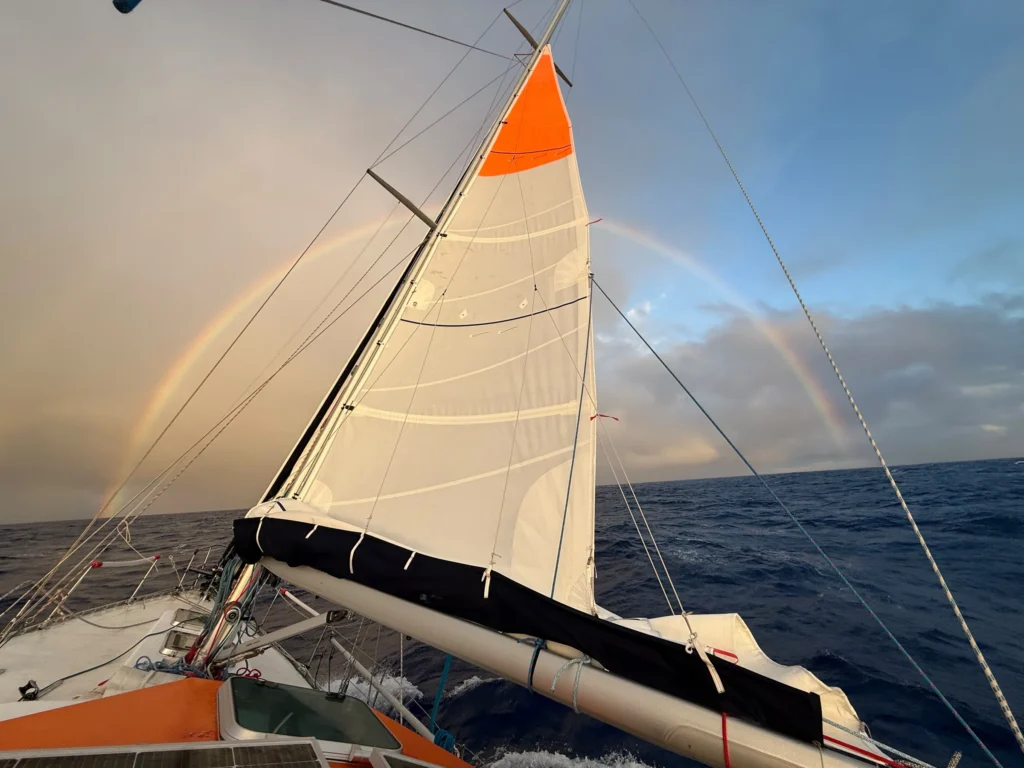
Sails delivered to 12 countries in our first year. Kraken sails have crossed the Pacific several times. Read the Tahiti delivery

Reefed mainsail under way from Tahiti to Fiji, with a rainbow over the sea
In the press

Kraken in the Press.

mySailing · 2 November 2026

Kraken Sails Toecutter first on AMS and PHS in Division One.

Read the story

mySailing · May 2026

Ryan’s Sydney 32 takes the Apollo Bay Perpetual Cup on a new set of sails.

Read the story

mySailing · March 2025

The double-handed First 50 racing to Japan on a Kraken mainsail and A2.

Read the story

Sails Magazine · March 2025

Melbourne to King Island, with Toecutter topping ORC.

Read the story

The name

Why Kraken?

No, not the rum. We’re Mount Gay people. (Although we won’t be sad if you buy us a shout).

The Kraken is the beast that rises from the deep and upends things. That’s the job. When we’re told how things are done in sailmaking, we ask one question: are we doing this because it works, or because it’s always been done this way?

What it's for

Better Sails
for More Sailors.

You don’t buy new sails to win, mostly. You buy them so your boat sails the way its designer meant it to. A well-made sail feels like a new set of perfectly balanced tyres. The helm goes light, the autopilot stops working so hard, and the whole boat settles into the groove. A cheap sail is still a thousand dollars, and you spend it and your boat sails no better.

We want every sail we make to be a joy to bring out, and to help keep you safe when the weather turns.

Some sailmakers spend their energy fighting over who sells sails at which club. We’d rather spend ours getting people stoked on sailing. If more people sail, and keelboat racing and ownership feel affordable again, more sails get bought and every loft is better off. All boats rise on the tide. Not everyone in sailmaking likes a loft doing it differently, and we’ve been told more than once to stop. Our sailors keep telling us to keep going.

We think a sailmaker’s job is to help you choose well. Get it right and you end up with a wardrobe you’re excited to use, that doesn’t feel like a financial burden, that doesn’t make you cringe every time a sail flogs, and that makes you fall in love with your boat again.

Tell Us About Your Boat.

Your boat, your rig, and how you sail it. We’ll take it from there.