

Handicap Racing
Your Wardrobe.
Your Waters.
Your Campaign.
IRC, ORC, AMS & PHRF racing is about more than individual sails, it’s about building a complete wardrobe that works together across your racing conditions and campaign timeline. We don’t just build you a mainsail or a jib. We look at your boat, your home waters, your rating, and your goals to design a whole system of sails that gives you a genuine competitive edge on the racecourse.
Wardrobe Strategy
A Sail Isn't an Individual Purchase.
It's Part of an Ecosystem.
Wardrobe strategy doesn’t mean you need to buy a full set of sails. Sometimes it’s about one sail, the right sail, that fills a gap in what you already have and maximises the opportunity from that gap. Sometimes it’s about developing an entire wardrobe for a major campaign. Either way, the thinking is the same: every sail exists in context. It interacts with your existing inventory, your racing conditions, and your goals for the next twelve to twenty-four months.
We start by understanding what you have that’s working, what’s due for replacement, and where the real opportunities are. Then we design a sail, or a set of sails, that fits into that picture with purpose, not just because it’s time to replace something.
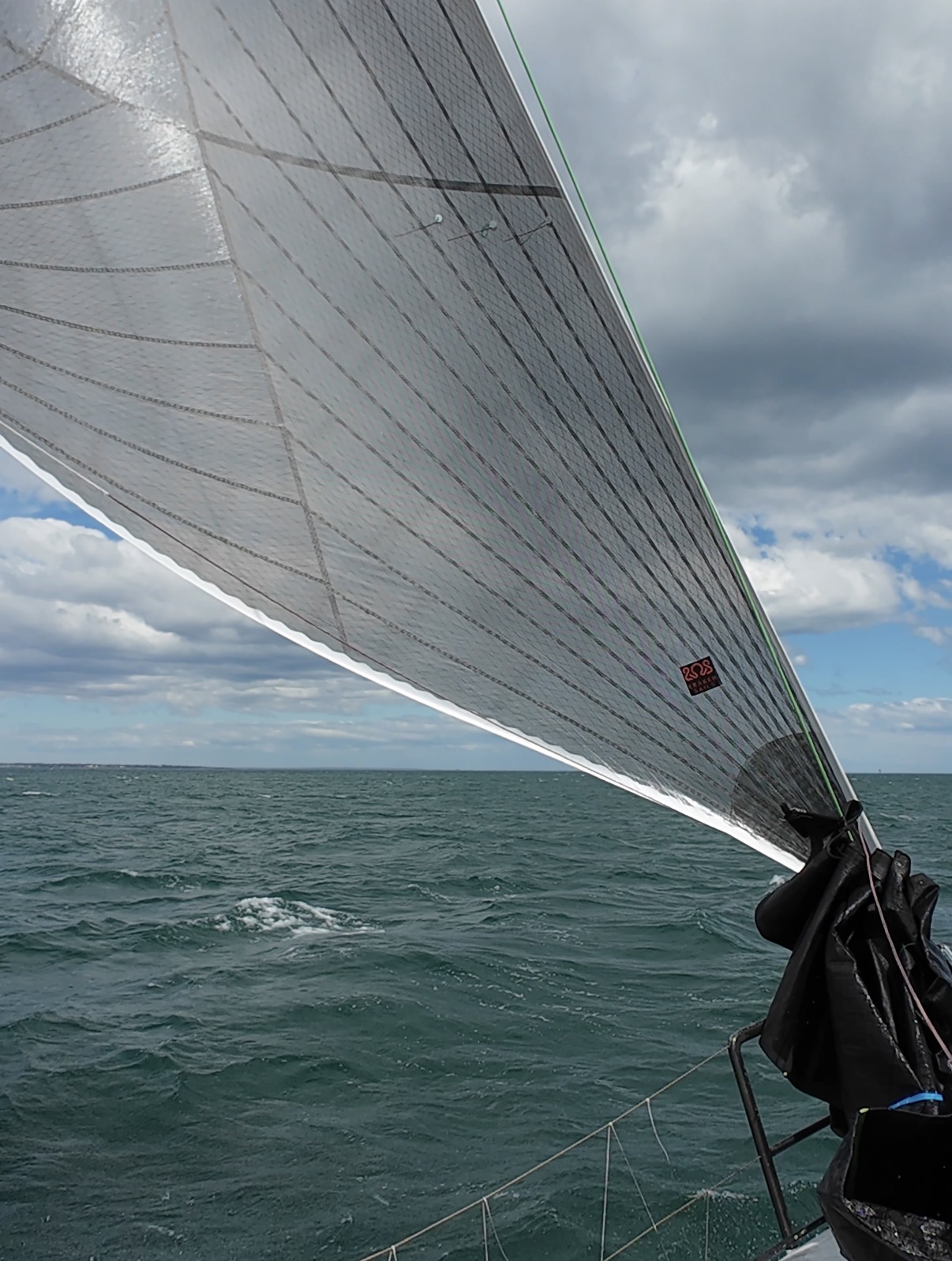
Current Inventory
We start by looking at what you already have, asking honest questions about what’s working, what isn’t, and where the gaps are in your wardrobe. We identify sails that are being replaced in the next campaign cycle and understand how the new sail will interact with what stays on the boat. For example, you might know you need a lighter inshore jib for next season, but the mainsail you’re buying now should be designed to work with your current J2 offshore, not force you into other purchases. Building overlap and capability takes thought.
Racing Conditions
Your boat doesn’t race everywhere, it races in specific waters, in specific seasons, with characteristic weather patterns and sea states. If you sail in chop and short-period swell most of the year, a sail designed for flat water won’t work the same way. We factor in your home waters, typical wind patterns, the difference between protected waters and offshore conditions, and whether you’re looking for raw power to drive through a seaway or pure speed in flat water. That context shapes every design decision we make.
Angles & Opportunities
Many crews focus entirely on upwind and downwind speed, but the racecourse tells a different story. You’re spending significant time reaching, running, and on cracked-off angles where most sailors haven’t optimized their wardrobe. We map where you’re actually spending time during your typical race, identify where the passing opportunities are, and then design your wardrobe to dominate those angles. It’s often where the biggest performance gains hide.
Rating Impact
Every design decision we make is checked against your IRC, ORC, or PHRF rating to understand the rating cost. We don’t accidentally add measurement points, if we’re adding points to your rating, it’s a conscious choice because the performance gain materially outweighs the handicap cost. That discipline keeps you competitive.
Offshore Campaigns
For Big Races,
We Map the Weather.
For boats campaigning in big offshore races: Sydney Hobart, Fastnet, Melbourne Osaka, or around-the-world events, generic wardrobe planning isn’t sufficient. We analyse historical GRIB files across the racecourse, map weather systems to predicted wind angles, and estimate the percentage of race time you’ll spend at each angle. That deep forecast context shapes every design decision: sail size, shape, material choice, even hardware selection. You end up with a wardrobe designed specifically for the conditions and angles you’ll actually encounter, not generic compromise sails that perform adequately everywhere but brilliantly nowhere.
For an identical boat, the wardrobes we’d design for these two races are fundamentally different in size, shape, construction, and strategy. That’s the difference between buying a sail and planning a campaign.
Trans-Pacific
San Francisco to Hawaii is fundamentally a downwind race, with the bulk of your time spent running, reaching, and on cracked-off angles. Your wardrobe emphasizes asymmetric performance, light-air reaching, and downwind efficiency. You’re optimizing for a completely different set of wind angles than you would for an upwind-heavy race.
Sydney → Hobart
Sydney Hobart is classically 24 to 36 hours of hard upwind work in Bass Strait, where some of the world’s most challenging sea states develop. Your wardrobe is built for heavy-air upwind performance and the power to drive through large, short-period swell. Once clear of the coast, the race often transitions to reaching, but the priority is having bulletproof upwind capability and the ability to carry maximum driving force in difficult conditions. It’s completely different from Trans-Pac.
Crew Configuration
The Wardrobe Changes
With the Crew.
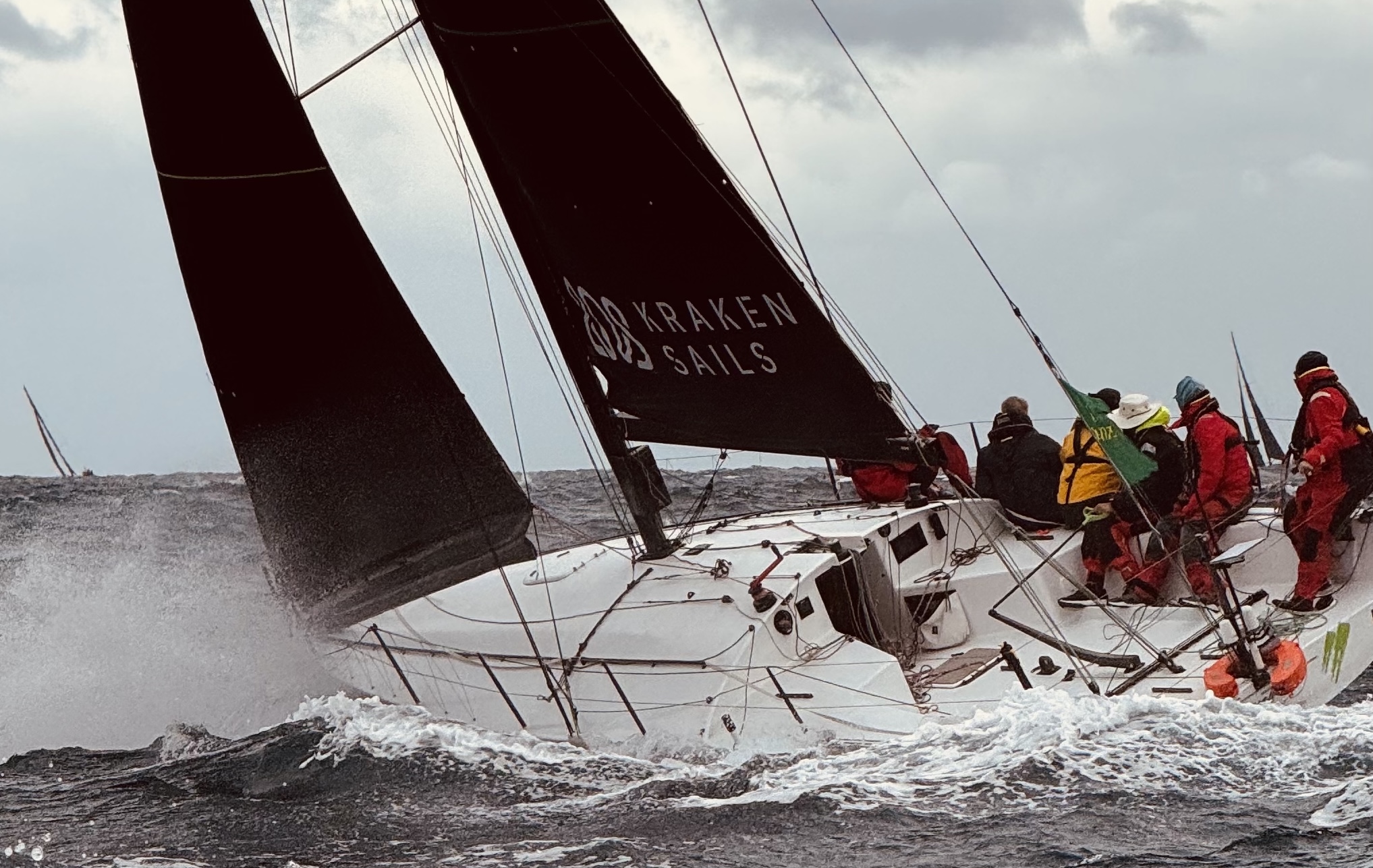
Fully Crewed
With a full crew, you have the manpower to handle frequent sail changes, which means you can optimize each sail for a narrower range of conditions. Your wardrobe is larger because each sail does one job brilliantly rather than compromising to cover a wide range. You build dedicated light-air sails, medium-wind sails, heavy-air sails, each tailored for its specific window. The design philosophy is maximum performance at every wind angle, with the crew capacity to execute multiple changes per race if needed.
Shorthanded & Solo
Shorthanded sailing is fundamentally different. With a smaller crew, you need fewer sails that each work across a wider wind range. Every sail change is a major physical effort, so you minimize them, ideally reefing rather than setting a different sail. Hardware choices become critical: hanked headsails so you can drop a sail on the halyard and reattach the lower tack without wrestling a full-size jib around the foredeck in a seaway. Deeper reef points that let you reef down further without needing a separate trysail. Low-friction ring hardware for easier handling. The philosophy shifts from maximum speed at every angle to sustainable, safe performance that a two-person crew can manage for hours or days without exhaustion becoming the limiting factor.
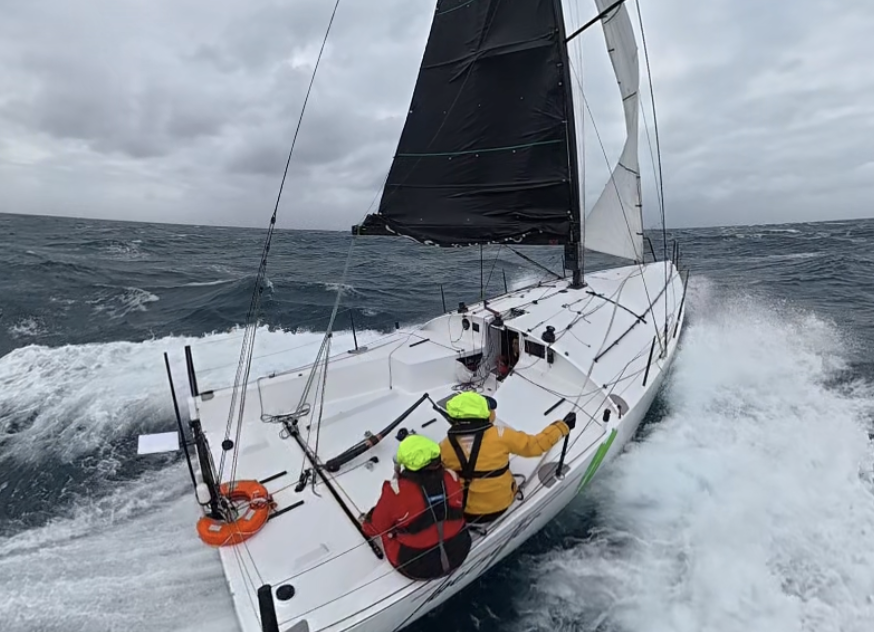
Racing Materials
The Same Cloth You'd demand from a Top Loft.
We source our cloth from the mills that have been engineering performance sailcloth for decades — Dimension-Polyant and Contender. These aren’t generic textile manufacturers who happen to make sailcloth on the side. They’re specialists whose entire R&D is built around how woven and laminated fabrics behave under cyclic loading, UV exposure, and the kind of sustained shear forces that racing generates over a season. Their laminate films are more stable, their adhesion chemistry is more advanced, and their quality control catches the inconsistencies that cheaper alternatives let through.
We work with these suppliers because their cloth does what it says it will do, season after season. That’s the starting point for everything we build.
Laminate
Polyester-cored and exotic laminates are the workhorse of club racing and coastal IRC. We prioritise Dimension-Polyant as the best in the business, and specify the right weight and construction for your boat’s rig stiffness and expected conditions. Laminate is durable, predictable over a campaign season, stable in shape, and cost-effective. It’s what every major loft uses for this category because it delivers consistent performance across the widest range of boats and crew types.
Apex Membrane
For competitive IRC, offshore campaigns, and grand prix racing, we design with Apex membrane, a film reinforced with custom fibre grids printed specifically for your sail’s load paths. Membrane delivers superior shape stability, better handling under rig flex, and more consistent performance over a wider range of wind angles. But it’s not the answer for every boat. If your rig is very rigid or you’re racing in light air where shape matters less than weight, membrane may not deliver the performance benefit that justifies its cost.
Race-Ready Finish
Manufacturing Precision
That Stands up to Scrutiny.
Panel Preparation
We CNC-cut your panels to within 1 millimetre tolerance. On membrane sails, fibre placement is verified against the design file, every grid intersection is checked and photographed. There’s no approximation here, no eyeballing to compensate. The precision comes from the cutting and builds through the entire assembly process. It’s the kind of manufacturing accuracy that survives both the measurer’s scrutiny and the years of use on the racecourse.
Robust Seams
We glue our seams rather than just stitching them. On a stitched seam, the thread perforates the cloth and the load transfers through those needle holes, tiny stress concentrations that accumulate over time. A glued seam distributes shear forces across the entire bonded surface, which means better load transfer, longer life, and a smoother panel surface with less turbulence at the joins. It takes more time. It’s worth it.
Hand Finishing
We handstitch all hardware rather than riveting it. A rivet punches through the cloth and creates a hard point, fine on day one, but over hundreds of loading cycles that hard point works the surrounding material and eventually compromises it. Handstitching spreads the attachment load across a wider area and lets the cloth flex naturally around the fitting. Our radial patches and block patches are built up in layers with the correct fibre orientation at each stage, reinforcing the high-load corners without adding unnecessary weight to the rest of the sail.
Hardware & Detail
Every sail ships complete and ready to race. Sail bag, UV cover, leech lines, battens, tack rings, head patches, telltales, it’s all there.
Even the sail bag is half a metre oversized, because cramming a big sail into a tight bag damages the cloth every time you pack it. It’s the little things that make a sail a joy to live with and use, and they all come from building sails by hand, with intention, one detail at a time.
No hidden upcharges, no extras to buy separately. What you see is what you get, and it’s ready to go from the moment you open the box.
01
Wardrobe Review
We start by understanding your complete picture. What sails are in your current wardrobe, which ones are working well, where are the gaps, and what’s your racing program for the next campaign cycle. We also look at your rating — IRC, ORC, or PHRF — and your home waters. Rather than jumping to “what sail do you want to buy,” we first understand what your boat actually needs across the entire ecosystem of your racing.
02
Design from Your Rig
We take detailed measurements from your actual boat — mast profile, spar characteristics, sheeting positions, forestay sag, rig stiffness. We design from first principles using SailPack or Azure, building the sail specifically around your boat’s parameters rather than starting from a generic baseline. This is where boat-specific optimization begins.
03
Rating Verification
Before the design is locked in, we verify all geodesic measurements — the measurements that contribute to your rating — against your IRC, ORC, or PHRF certificate. This step ensures there are no surprises when you bring the sail to the measurer. You know exactly what the rating impact will be.
04
Build, QA & Deliver
We build the sail, and every stage is tracked in your portal so you can watch the progress. Four quality checkpoints along the way catch any issue before it becomes a problem. If something doesn’t meet our standard, it doesn’t ship. When it’s ready, you get a race-ready sail.
Case Studies
Wardrobe Planning
in Practice.
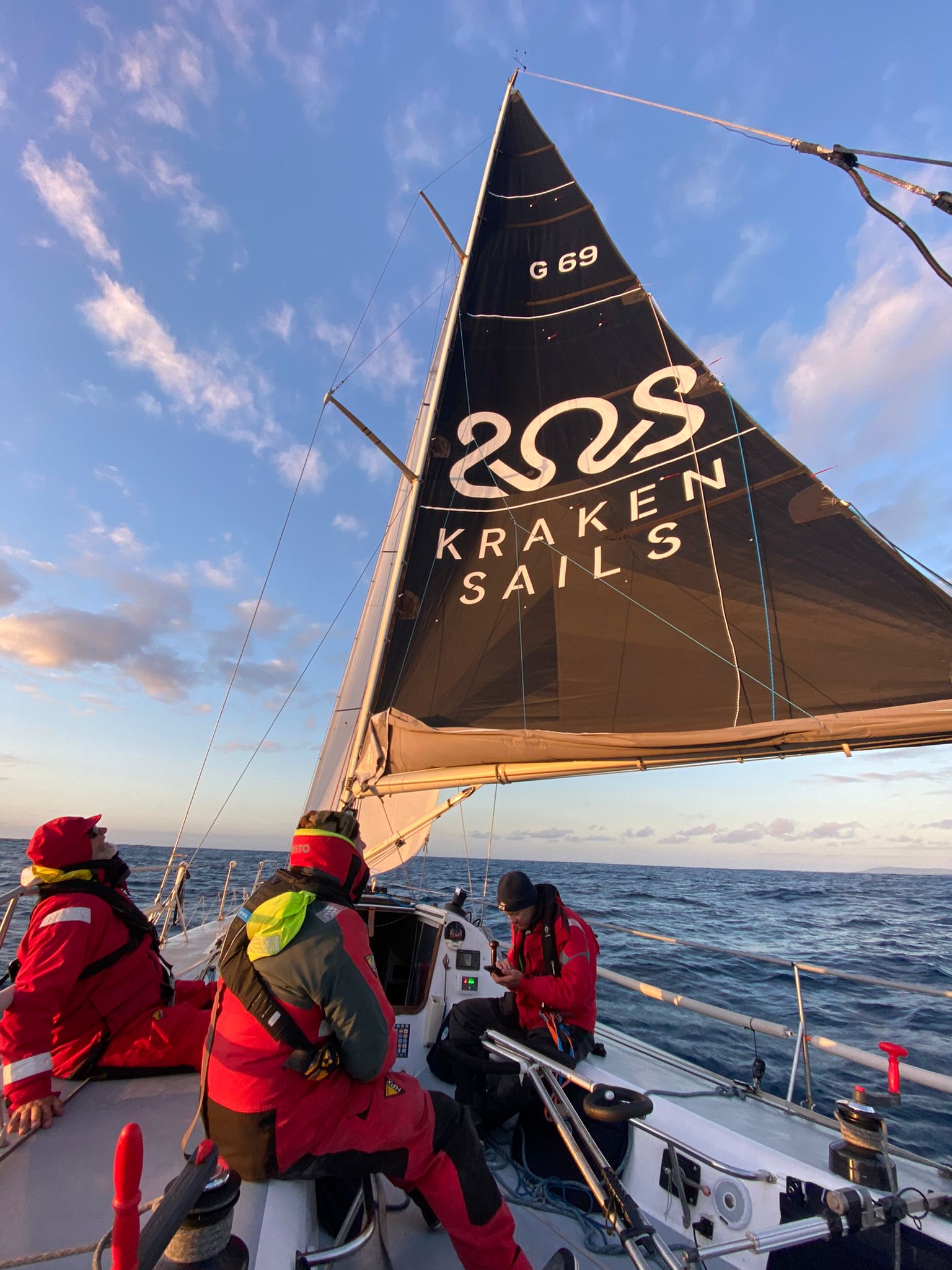
SYDNEY HOBART 2024
DARK AND STORMY
A 37-foot boat with a 40-foot rig, needing a Sydney Hobart wardrobe that also set the owner up for shorthanded ocean racing. Polyester-cored laminate main with survival-depth reefing, and a hanked J2 covering 12–30 knots.
MELBOURNE TO OSAKA
BENETEAU FIRST 50
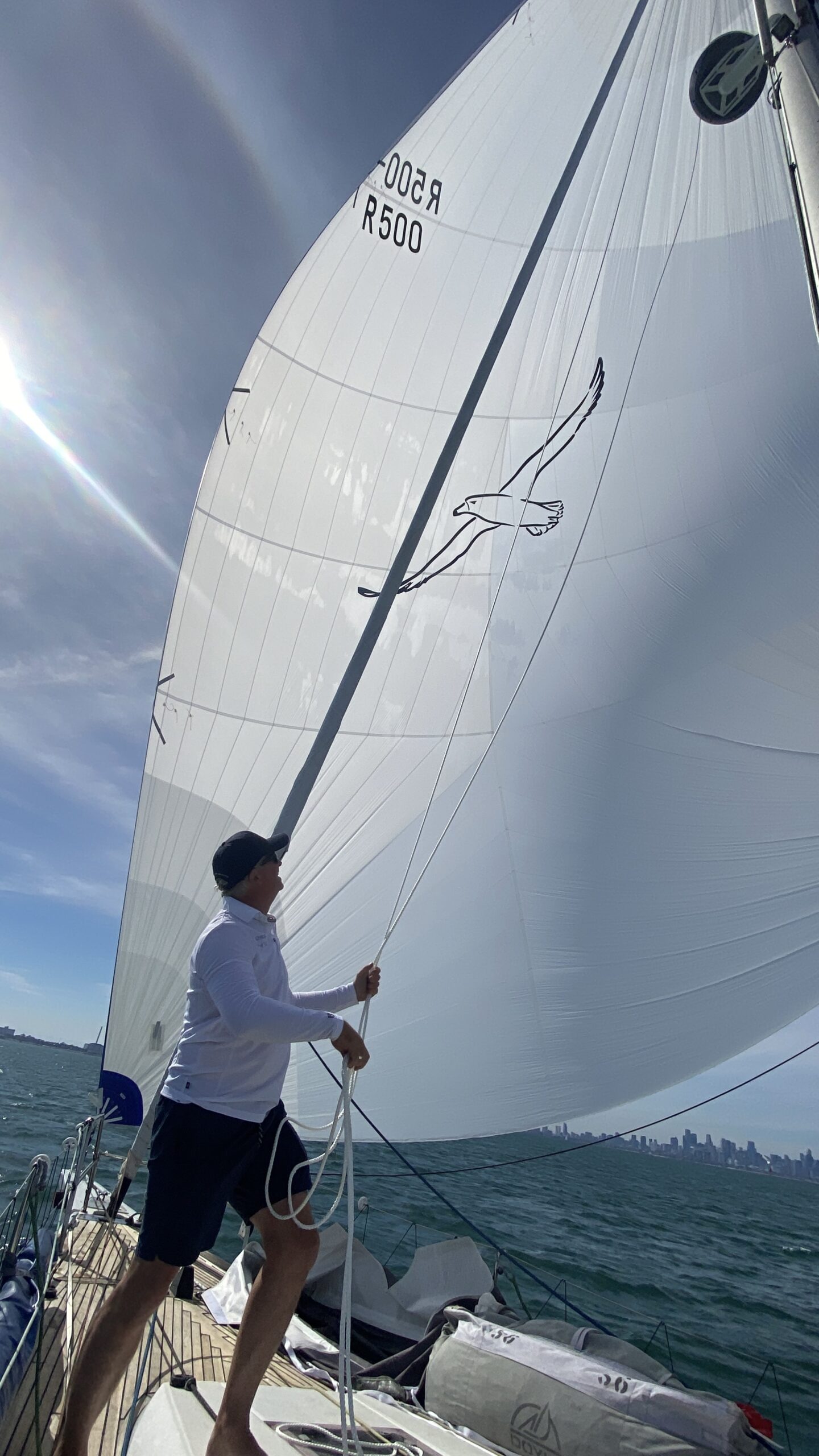
A 13-ton cruiser-racer crossing five weather systems double-handed. One A2 that could float the boat through equatorial calms and be sailed hard at 25 knots, by a crew who started the race saying they’d never fly it above 15.
Ready to Race?
Let's Plan Your Campaign.
Start with a conversation about your wardrobe, your racing waters, and your campaign goals. We’ll scope the right sails for your boat and program. And if we’re not the right fit for what you need, we’ll tell you.